Butterfly Rozena vs Xiom Vega Europe: Which Should You Buy?
| Butterfly Rozena | Xiom Vega Europe | |
|---|---|---|
| Our rating | 8.4/10 | 8.0/10 |
| best_side | both | BH |
| control | high | 9 |
| speed | 13.0/14 | 7 |
| spin | 10.8/12 | 8 |
| sponge_hardness | ~35° | around 47.5 degrees (soft, listed near 42.5 ESN) |
| type | tensor inverted (Spring Sponge) | inverted |
| weight_uncut_g | 67 | 60 |

We may earn a commission from links on this page. Learn more.
The contradiction worth explaining first
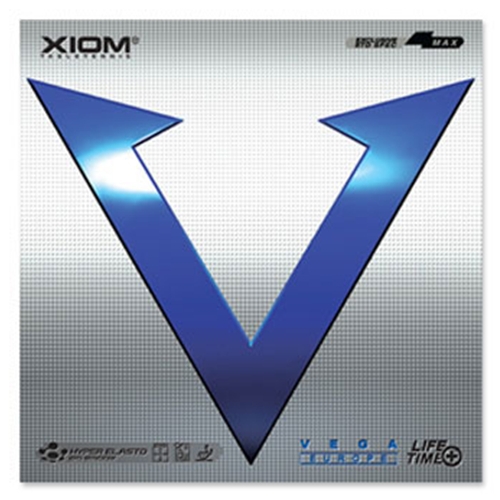
Butterfly Rozena carries an 8.4 overall Revspin rating and Xiom Vega Europe carries an 8.0 — Rozena wins by 0.4 points overall. But look at the two axes both rubbers are actually sold on: control and spin. Vega Europe scores higher on both. Control is 9.1 for Vega Europe versus 8.7 for Rozena, a 0.4-point edge to Vega Europe. Spin is 8.9 for Vega Europe versus 8.4 for Rozena, a 0.5-point edge to Vega Europe. So the rubber that is objectively better on the two axes both bestFor descriptions emphasize still ends up rated lower overall. That’s not a data error — it reflects something the six-axis radar doesn’t fully capture: ceiling.
What the radar misses: Vega Europe’s own cons admit a lower ceiling
Vega Europe’s cons list states plainly that it “lacks top gears to hit high-quality finishing shots” and has “average speed and spin compared with modern tensors.” Neither of those complaints is really about control or the specific spin score at moderate speed — they’re about what happens when a player tries to push the rubber toward its limit in a fast rally. Rozena’s higher overall rating likely reflects reviewers weighing that longer-term ceiling alongside the axis scores, not just the axis scores in isolation. This is a genuinely useful nuance: a rubber can score higher on the specific things a beginner needs today and still rate lower overall because of where it caps out tomorrow.
Throw is the other real gap, and it explains the rating difference better than control does
Throw favors Rozena by 0.8 (5.5 vs 4.7), the largest single-axis gap on this pair. A lower throw for Vega Europe means a flatter trajectory that’s less forgiving when opening against heavy backspin from distance — consistent with Vega Europe being positioned as a close-to-the-table, backhand-first control rubber rather than an all-court attacking tool. This is likely a bigger contributor to the overall rating gap than the small control or spin differences.
Speed and durability are non-factors here
Speed differs by only 0.1 (8.6 vs 8.7) and durability is exactly tied at 6.8 for both rubbers — genuinely a non-factor in this comparison, unlike several other pairs in this dataset where durability is the deciding axis. If you were expecting Vega Europe’s lower price positioning to come with a durability penalty, the data says it doesn’t; it lasts exactly as long as Rozena on the aggregated numbers.
Tackiness is a small gap in Vega Europe’s favor
Tackiness favors Vega Europe by 0.4 (1.5 vs 1.9), both numbers still low relative to tacky Chinese-style rubbers elsewhere in this catalog. This lines up with Vega Europe’s pros noting it’s “spin insensitive, which makes receiving serves easier” — a small tack edge helps a little with serve return regardless of incoming spin.
Where the reviews come from
Rozena’s citations run through Revspin, Megaspin, and general Reddit discussion. Vega Europe’s citations include a dedicated Racket Insight review, Megaspin’s product review page, and a Reddit search thread specifically covering user experiences with the rubber — worth reading if you want more color on how its “lacks top gears” con actually shows up in match play at different skill levels.
Who actually fits which rubber
Rozena’s bestFor profile is developing and intermediate offensive players who want Spring Sponge feel with maximum control and forgiveness. Vega Europe’s bestFor profile is beginner and intermediate all-round players who want maximum control, stability, and consistency on the backhand at a low price, and anyone building reliable strokes before moving to faster tensors. Notice that Vega Europe’s own description frames it explicitly as a stepping-stone rubber — “before moving to faster tensors” — which is consistent with its lower overall rating despite winning on control and spin axis scores.
Switching from Vega Europe to Rozena, or the reverse
If you’re on Vega Europe and progressing well, moving to Rozena keeps the same control-first identity — both share a similar low-tackiness, high-forgiveness profile — while giving you more throw (0.8 points) and more room to grow before you outgrow the rubber’s gears. Going the other direction, from Rozena down to Vega Europe, makes sense mainly on price if you’re a true beginner still building strokes; you won’t lose control or spin doing so, per the axis data, but you will eventually hit Vega Europe’s ceiling sooner given its own cons around top-gear performance.
Frequently asked questions
If Vega Europe scores higher on control and spin, why is its overall rating lower than Rozena's?
The overall rating likely accounts for ceiling, not just current-axis performance. Vega Europe's own cons list admits it lacks top gears for high-quality finishing shots, and it also trails badly on throw (4.7 vs 5.5, a 0.8-point gap), which together pull the overall score below Rozena's despite Vega Europe's 0.4-point control edge and 0.5-point spin edge.
Is one of these rubbers more durable than the other?
No -- durability is exactly tied at 6.8 for both. This is one of the only axes in this entire rubber comparison set with a zero-point gap, so it's genuinely not a factor in choosing between them.
Is Xiom Vega Europe a good rubber to start on before upgrading later?
Yes, per its own bestFor description, which explicitly targets beginner and intermediate players building reliable strokes before moving to faster tensors. Its strong control (9.1) and spin (8.9) scores support early development, while its lower throw (4.7) and capped top gears are the tradeoffs to expect to outgrow.