Butterfly Rozena vs Nittaku Fastarc C-1: Which Should You Buy?
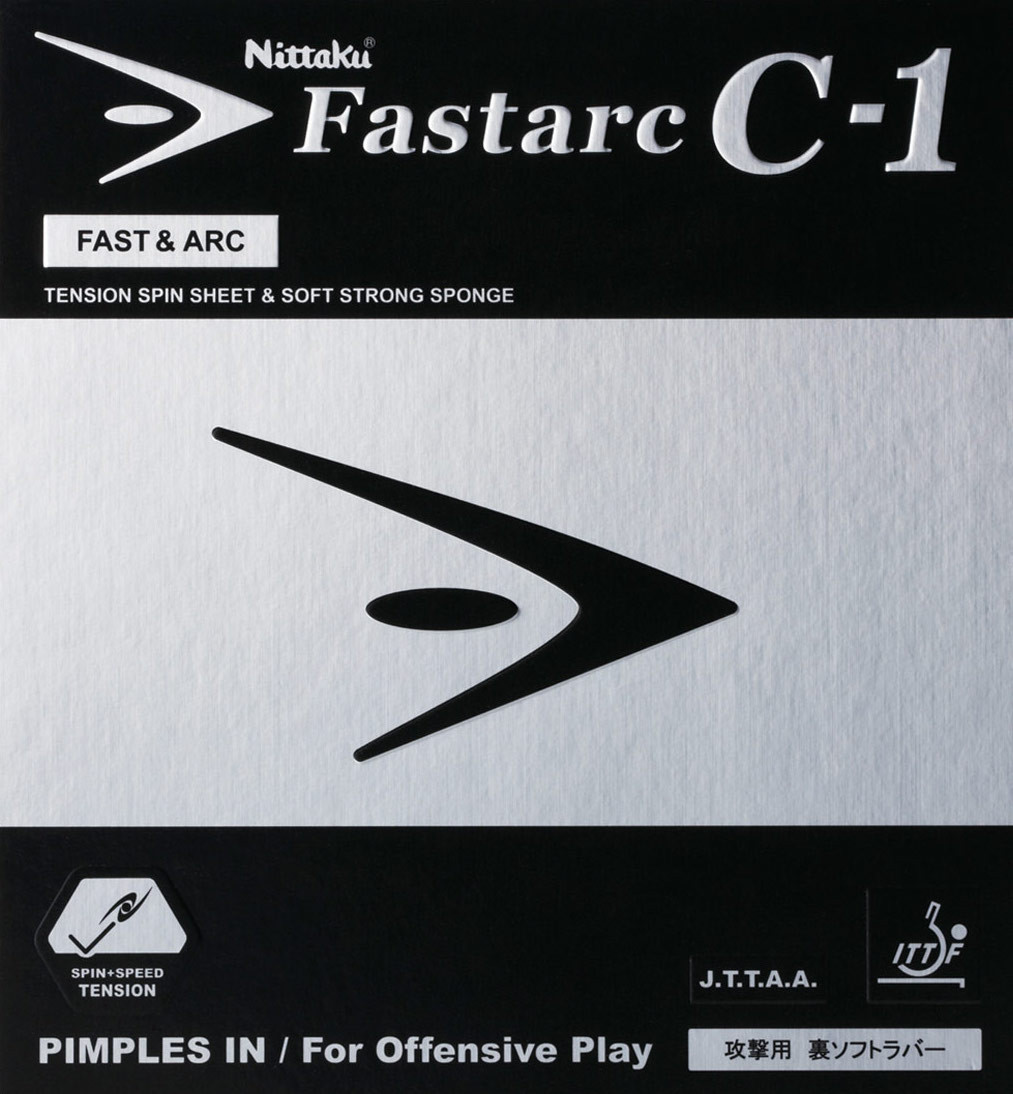
| Butterfly Rozena | Nittaku Fastarc C-1 | |
|---|---|---|
| Our rating | 8.4/10 | 8.4/10 |
| best_side | both | backhand or allround |
| control | high | high |
| speed | 13.0/14 | 15.25 (Nittaku scale) |
| spin | 10.8/12 | 12.25 (Nittaku scale) |
| sponge_hardness | ~35° | 45 degrees |
| type | tensor inverted (Spring Sponge) | inverted / tensor |
| weight_uncut_g | 67 | approx 47 g (157 x 150 mm sheet) |

We may earn a commission from links on this page. Learn more.
The spec sheets from Butterfly and Nittaku don’t actually agree with each other
Butterfly rates Rozena’s speed and spin on its own 1-to-14/1-to-12 scale (13.0/14 speed, 10.8/12 spin). Nittaku rates the Fastarc C-1 on its own scale (15.25 speed, 12.25 spin). Those numbers look like the C-1 is dramatically faster and spinnier, but you cannot compare a Butterfly number to a Nittaku number directly — the scales aren’t calibrated against each other. That is exactly why the independent, aggregated user ratings on Revspin matter more here than either manufacturer’s marketing figures. Both rubbers carry an overall Revspin rating of 8.4, which already tells you these are closer in real-world performance than the raw spec sheets suggest.
The axis that actually separates them: durability
Look at the six axis scores and one gap dwarfs the others: durability, where Rozena sits at 6.8 and the Fastarc C-1 sits at 8.4, a 1.6-point spread. Every other axis differs by 0.7 or less. In practical terms, a 1.6-point durability gap on a 10-point scale is the difference between a topsheet that needs replacing noticeably sooner and one that holds its grip through a longer stretch of regular training. Reviewers on Megaspin and Revspin describe the C-1’s tensor topsheet as holding up well over time, and that durability edge is the single most measurable reason to prefer it if you play multiple sessions a week and hate re-gluing.
Spin and control both lean toward the C-1, but not by the same amount
Spin favors the C-1 by 0.7 (8.4 vs 9.1) and control favors it by 0.5 (8.7 vs 9.2). The spin gap is large enough to notice on a slow, heavy topspin rally — the C-1 has more dwell time and a higher spin ceiling for players who can generate their own rotation. The control gap is smaller and, per the Fastarc C-1’s own con list, comes with a catch: it “does not generate much free spin passively” and “needs active strokes.” Rozena’s whole reputation, reinforced by its pros list, is the opposite: forgiving, fault-tolerant, easy short game. So the 0.5-point control edge for the C-1 is a ceiling number, not a floor number — it rewards a committed swing rather than bailing you out on a rushed one.
Where the difference is basically noise
Throw is functionally identical: 5.5 for Rozena versus 5.4 for the C-1, a 0.1 gap that is well within rating noise. Anyone choosing based on arc alone will not feel a difference. Tackiness is also close in absolute terms — 1.5 versus 2.0 — and both numbers sit near the bottom of the scale, meaning both rubbers are low-tack, grip-through-friction tensors rather than tacky Chinese-style sheets. The 0.5-point gap here is real but small next to rubbers elsewhere in this lineup that score 4 or higher on tackiness.
The sponge hardness gap explains the “needs active strokes” complaint
The spec sheets list Rozena’s sponge at roughly 35 degrees and the C-1’s at 45 degrees. That ten-degree jump is a genuine mechanical difference: a firmer sponge needs a faster, more committed stroke to compress and release its stored energy, while a softer sponge like Rozena’s gives some spin and pop back even on a half-hearted swing. This is the physical reason the C-1’s cons list calls out a need for active strokes and warns that it rewards a technically sound game — it is not a subjective impression, it is the sponge doing exactly what a 10-degree-harder sponge does.
Who each one actually fits
Rozena’s own bestFor description targets developing and intermediate offensive players, especially on the backhand, who want Spring Sponge feel with maximum forgiveness and an easy short game — consistency over outright spin. The Fastarc C-1 targets intermediate-to-advanced loopers who want premium tensor spin with a forgiving arc, ideally as a backhand rubber or an allround forehand option for players who value arc and consistency over raw speed. Note the overlap: both are pitched as control-and-arc rubbers rather than raw speed rubbers, which is why their overall ratings tie at 8.4 despite different topsheet chemistry.
Should you switch from Rozena to the Fastarc C-1?
If you’re already comfortable on Rozena and happy with its control and short game, switching purely for the 0.7-point spin bump is a marginal trade: you give up some fault tolerance and take on a firmer sponge that punishes a lazy stroke, in exchange for spin you may not be swinging fast enough to unlock yet. But if you’ve plateaued on Rozena because its spin ceiling feels low against tensor-topsheet opponents, and you already commit fully through the ball, the C-1’s higher spin, higher control score at full extension, and notably better durability make it a legitimate step up — especially if you train often enough that the 1.6-point durability edge translates into real money saved on replacement sheets over a season.
Frequently asked questions
Is the Nittaku Fastarc C-1 simply a better rubber than Butterfly Rozena?
Not overall -- both carry an identical 8.4 Revspin rating. The C-1 leads on spin (9.1 vs 8.4), control (9.2 vs 8.7) and durability (8.4 vs 6.8), but Rozena's whole identity is fault tolerance and an easy short game that the C-1's firmer 45-degree sponge doesn't match for beginners.
Which rubber lasts longer in regular training?
The Fastarc C-1, by a clear margin. Its durability score is 8.4 versus Rozena's 6.8, a 1.6-point gap that is the largest difference between these two rubbers on any axis, and it matches reviewer comments about the C-1's topsheet grip holding up well over time.
Does the Fastarc C-1's firmer sponge mean I need a different blade?
Not necessarily a different blade, but a more committed stroke. At 45 degrees versus Rozena's roughly 35, the C-1 needs faster racket speed to compress the sponge and release spin -- its own cons list warns it does not generate much free spin passively and needs active strokes.