Butterfly Ovtcharov Innerforce ALC vs Tibhar Stratus Power Wood: Which Should You Buy?
| Butterfly Ovtcharov Innerforce ALC | Tibhar Stratus Power Wood | |
|---|---|---|
| Our rating | 8.8/10 | 9.0/10 |
| feel | crisp and firm with controlled dwell | Elastic with long dwell time, lively yet controlled, larger-than-average head and big sweet spot |
| handle | FL / ST / AN | FL / ST / AN |
| head_size_mm | 158 x 152 | — |
| plies | 5 wood plies with 2 inner ALC (Arylate Carbon) layers, 7-ply total construction | 5-ply all wood (Limba-Limba-Ayous-Limba-Limba) |
| reaction | 117 | — |
| speed | OFF+ | OFF- |
| thickness_mm | 6.2 | 6.2 |
| vibration | 105 | — |
| weight_g | 91 | 90 |
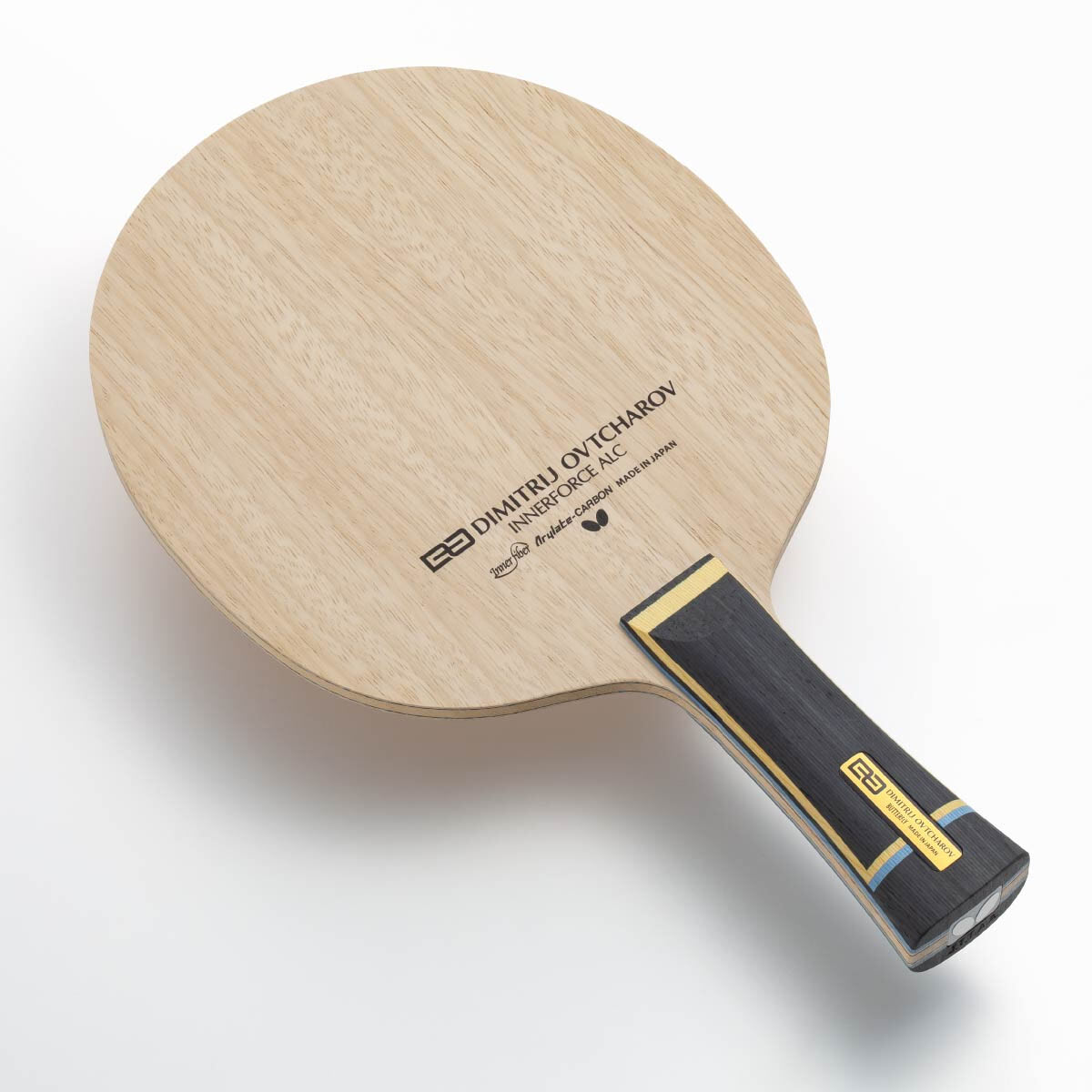
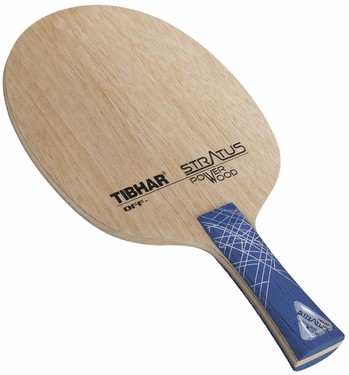
We may earn a commission from links on this page. Learn more.
The Big Surprise: Control Is Tied
If there is one number in this entire batch that should make a budget-conscious buyer stop and pay attention, it is this: control is exactly tied at 9.3 for both the Ovtcharov Innerforce ALC and the Tibhar Stratus Power Wood. One is a flagship carbon blade whose own cons admit a premium price reflects flagship positioning and requires advanced technique, the other is described in its own pros as phenomenal price-performance, widely called the best value 5-ply all-wood blade. Yet on the control axis, per the aggregated ratings behind this comparison, they perform identically.
Consistency tells a similar story, and it actually favors the cheaper blade: Stratus Power Wood scores 9.1 versus the Innerforce ALC’s 8.9, a 0.2-point edge to the wood blade. Speed is close too — 8.9 versus 9.2, just a 0.3-point gap, smaller than several of the other matchups in this dataset. None of these differences would be noticeable in an actual match.
Where the Real Gap Is: Stiffness and Hardness
The two axes that do move meaningfully are stiffness and hardness, both by exactly 1.0 point — Innerforce ALC at 5.9 stiffness and 6.4 hardness versus Stratus Power Wood’s 4.9 and 5.4. This lines up precisely with how each blade describes its own feel: the Stratus Power Wood’s pros call out a lively, elastic feel with crisp feedback, while the Innerforce ALC’s lab data puts its elasticity score at 2.02 with an overall crisp and firm character. In practice, the Stratus Power Wood gives the ball more time on the blade, long dwell, per its own pros, before it leaves, while the Innerforce ALC’s added carbon stiffness returns energy faster and more directly.
Why the Wood Blade Holds Up So Well
The explanation is in the Stratus Power Wood’s own pros: long dwell time gives a high, long arc and heavy spin on loops, and it offers enough speed for offense despite an OFF- classification — its cons even admit it plays faster than its OFF- rating suggests. Reddit r/tabletennis threads and the Tabletennis11 blog both back this reputation up as one of the better value blades in the all-wood category, which is consistent with why its control and consistency scores can sit this close to a blade costing significantly more.
Should You Switch?
If you are on the Stratus Power Wood and eyeing the Innerforce ALC, ask what you are actually short on. It is not control or consistency — those are effectively tied or in the wood blade’s favor. The real reason to upgrade is technique-driven directness: the Innerforce ALC’s stiffer, harder build produces the flatter, more explosive hitting and blocking that its own pros describe, outstanding blocking stability and flat-hit explosiveness, and it is built for players who need outer-ALC pace with inner-ALC control, per its bestFor. If your game still leans on long, spinny loops rather than flat power, you would be giving up the Stratus Power Wood’s dwell time for stiffness you may not use.
Going the other way, from Innerforce ALC down to Stratus Power Wood, makes sense for anyone whose technique is still developing, the Innerforce ALC’s own cons say beginners will struggle to control it, or who simply does not want to pay a premium price for numbers this close to a much cheaper wood blade.
Fit Notes
Both blades share nearly identical thickness (6.2mm each) and weight (91g vs 90g), so this is not a build-dimension decision — it is a stiffness-and-price decision. Handle options are the same shakehand spread (FL/ST/AN) on both sides.
Bottom Line
Do not pay a premium price expecting better control or consistency here — the numbers say you will not get it. Pay the premium only if you specifically want the Innerforce ALC’s stiffer, harder, more direct hitting character and have the technique to use it; otherwise the Stratus Power Wood delivers nearly identical control and consistency at a fraction of the cost.
Frequently asked questions
Does the premium-priced Innerforce ALC actually control better than the budget Stratus Power Wood?
No -- control is exactly tied at 9.3 for both blades on the axis data, and consistency slightly favors the cheaper Stratus Power Wood (9.1 vs 8.9).
What is the real difference between these two blades?
Stiffness and hardness, both by a full point in the Innerforce ALC's favor (5.9 vs 4.9 stiffness, 6.4 vs 5.4 hardness) -- it hits flatter and harder, while the Stratus Power Wood holds the ball longer for spin.
Is the Tibhar Stratus Power Wood good for beginners?
Yes, its own bestFor description targets beginner-to-intermediate two-winged loopers wanting a forgiving, spin-friendly blade with real attacking speed.
Is the Innerforce ALC worth the price premium over the Stratus Power Wood?
Only if you specifically want its stiffer, more direct hitting and blocking character and have the technique to use it -- otherwise the cheaper blade delivers nearly identical control and consistency.