Butterfly Innerforce ZLC vs Tibhar Samsonov Alpha: Which Should You Buy?
| Butterfly Innerforce ZLC | Tibhar Samsonov Alpha | |
|---|---|---|
| Our rating | 8.5/10 | 7.8/10 |
| feel | Soft-medium; woody feel with ZLC carbon layers near the core | medium-stiff, good dwell time, controllable |
| handle | AN / FL / ST | FL/ST |
| plies | 5 wood + 2 ZLC carbon (inner ZLC construction) | 5-ply all wood (Limba outer plies, Koto/Ayous middle layers) |
| speed | OFF | ALL |
| thickness_mm | 5.7 | 5.9 |
| weight_g | 84 | 85 |
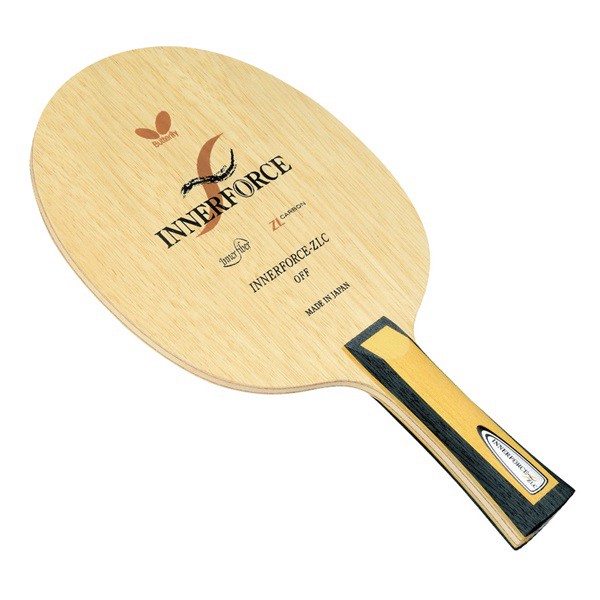
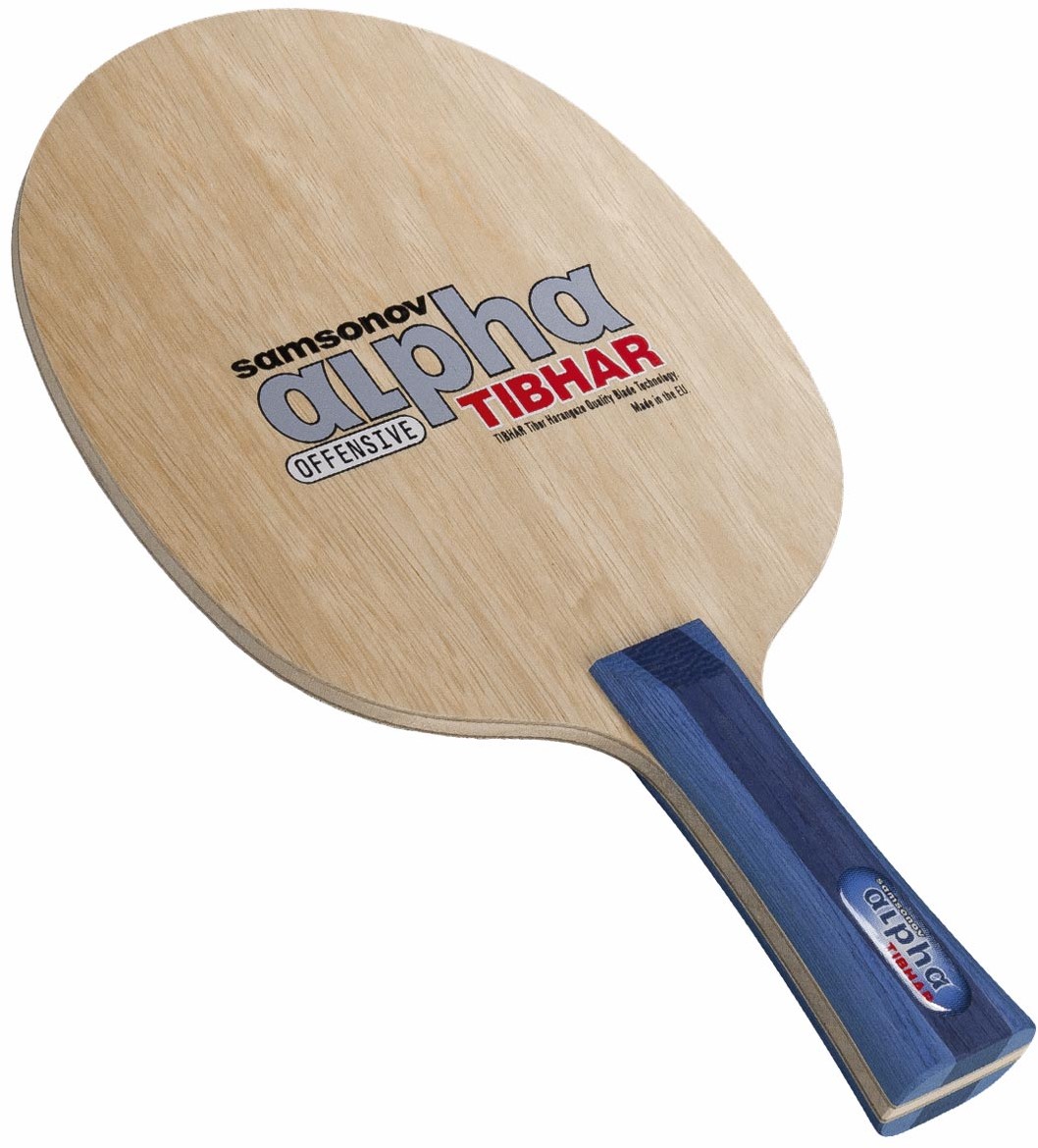
We may earn a commission from links on this page. Learn more.
The Innerforce ZLC is a specialist’s investment: discontinued, premium, suited to advanced topspin players who loop from close to mid-distance. The Tibhar Samsonov Alpha is a true learning blade—5-ply all-wood, forgiving, lightweight, and specifically designed for beginners and intermediate players developing allround attacking.
Choose the ZLC if you’re advanced, have solid fundamentals, and want rare woody carbon feel that rewards topspin technique. Pick Alpha if you’re a beginner or intermediate player, learning allround attack, seeking excellent control, or transitioning from recreational play. They serve entirely different player stages.
FAQ
Which suits beginners?
Alpha decisively. It’s forgiving on off-center hits, teaches stroke technique, and delivers enough speed to develop topspin. ZLC demands solid fundamentals.
When would you outgrow the Alpha?
Once you’re advanced and need more pace for mid-to-far-distance attacking, or want pure topspin specialization. The ZLC is your next step.
How much dwell-time difference is there?
ZLC’s dwell is exceptional and exceptional-rewarding. Alpha’s dwell is slightly above average—good for learning loops, but not premium.
Which is lighter?
Alpha at 85g is very light and easy to maneuver. ZLC at 84g is nearly identical, but feels more responsive due to carbon construction.