Butterfly Innerforce ZLC vs Donic Epox Control: Which Should You Buy?
| Butterfly Innerforce ZLC | Donic Epox Control | |
|---|---|---|
| Our rating | 8.5/10 | 7.8/10 |
| feel | Soft-medium; woody feel with ZLC carbon layers near the core | Low vibration, elastic, soft touch |
| handle | AN / FL / ST | Flared / Anatomic / Straight |
| plies | 5 wood + 2 ZLC carbon (inner ZLC construction) | 5-ply all wood |
| speed | OFF | ALL+ |
| thickness_mm | 5.7 | 5.1 |
| weight_g | 84 | 80-90 |
We may earn a commission from links on this page. Learn more.
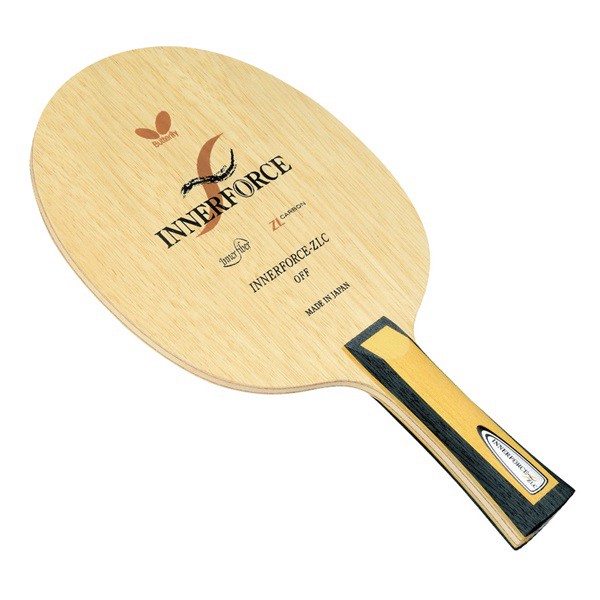
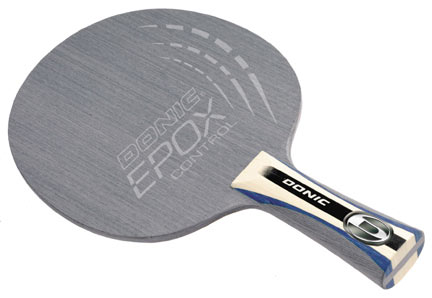
The Innerforce ZLC and Donic Epox Control exemplify the carbon-versus-all-wood divide. The ZLC trades some all-wood softness for real speed and maintains excellent control through its inner-carbon design; the Epox achieves its control reputation through epoxy-resin bonding and light weight, appealing purely to touch players and beginners.
The ZLC suits looping at mid-distance and dynamic rallies; the Epox suits choppers, blockers, and players in their early technical development. On feel, the ZLC offers feedback with power, while the Epox delivers consistent, predictable placement. The Epox’s 80-gram weight may be too light for aggressive players seeking momentum. If you want offensive potential combined with control, the ZLC wins. If you prize consistency and touch above all, the Epox is the lighter, more forgiving choice.
FAQ
Which blade is better for choppers?
The Donic Epox Control is explicitly designed for defensive play and pips-out backhand setups. The ZLC is much faster and unsuitable for chopping.
Does the Epox lack speed?
Yes, it rates ALL+ versus OFF. Offensive players will quickly outgrow it, but for beginners and all-round blockers, speed is adequate.
Which has better vibration damping?
The Epox features epoxy resin bonding for very low vibration. The ZLC has lower vibration than most carbon blades but not to Epox levels.
Is the Epox suitable for looping?
Light and soft, yes, but it is not power-friendly for heavy topspin. Better suited to gentle loops and placement.