Butterfly Innerforce ZLC vs Donic Appelgren Allplay: Which Should You Buy?
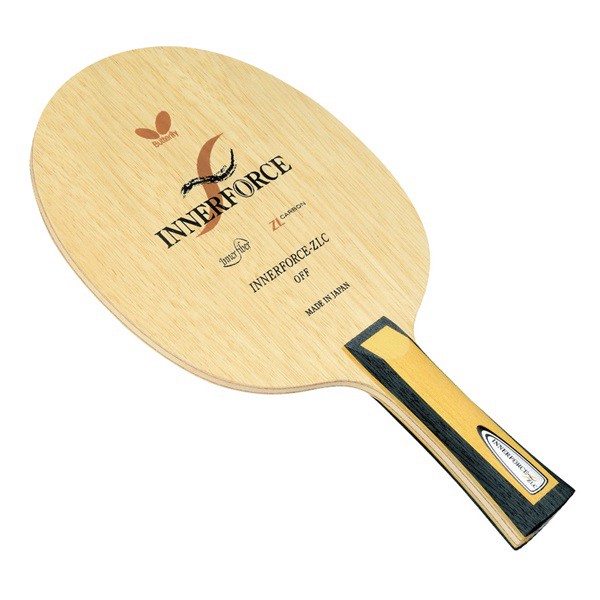
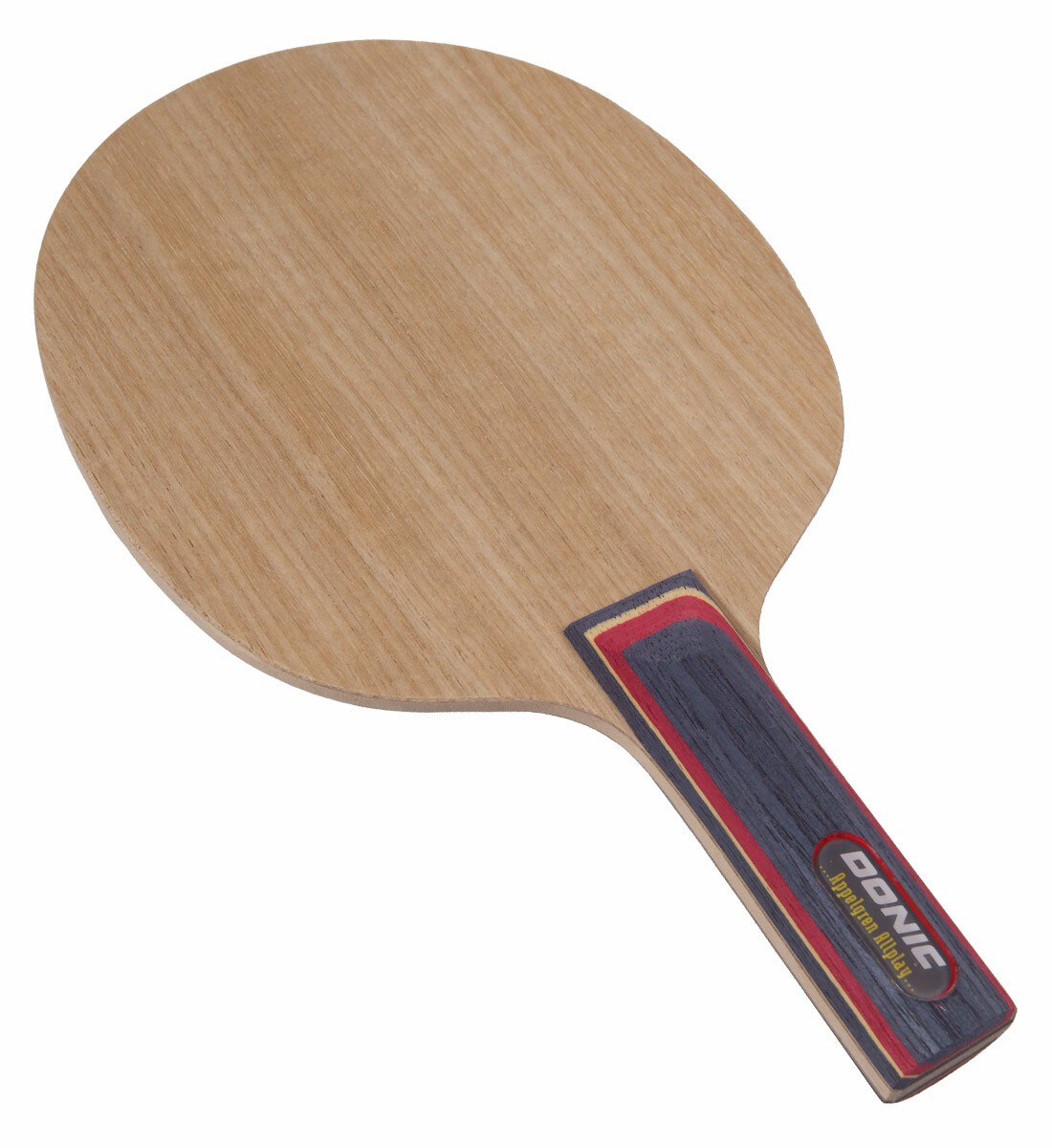
| Butterfly Innerforce ZLC | Donic Appelgren Allplay | |
|---|---|---|
| Our rating | 8.5/10 | 8.3/10 |
| feel | Soft-medium; woody feel with ZLC carbon layers near the core | medium, controlled |
| handle | AN / FL / ST | FL/ST/AN |
| plies | 5 wood + 2 ZLC carbon (inner ZLC construction) | 5W (abachi core + limba) |
| speed | OFF | ALL |
| thickness_mm | 5.7 | 5.8 |
| weight_g | 84 | 85 |
We may earn a commission from links on this page. Learn more.
The Butterfly Innerforce ZLC and Donic Appelgren Allplay target vastly different skill levels. The ZLC is an advanced blade demanding solid technique to unlock balance between speed, spin, and control; the Allplay is explicitly designed for beginners and intermediate players who prioritize forgiveness and learning feedback over raw performance.
The ZLC works across all ranges with high dwell; the Allplay excels at short-game touch and baseline consistency. On rubber pairing, the ZLC adapts to both tacky and fast rubbers, while the Allplay shines with quality non-tension rubbers like DHS Hurricane 3 or Yasaka Mark V. If you are developing proper technique and want a blade to grow with, the Allplay is the safer first custom setup. If you already have solid stroke fundamentals, the ZLC delivers the feel and power of a true ZLC.
FAQ
Can a beginner use the Innerforce ZLC?
Not recommended. The ZLC requires solid technique to exploit its balance. The Allplay is forgiving and teaches better stroke development.
Is the Allplay too slow?
Speed is adequate for its target player. Attackers outgrow it quickly, but for all-round club play it serves well.
Which blade pairs better with non-tension rubbers?
The Allplay is designed around non-tension rubbers and excels with them. The ZLC adapts to all rubber types but does not require them.
How much speed difference is there?
The ZLC is OFF-class, the Allplay is ALL-class. In practice, the ZLC generates noticeably more power at mid-distance and beyond.