Butterfly Glayzer vs Yasaka Rakza Z: Which Should You Buy?
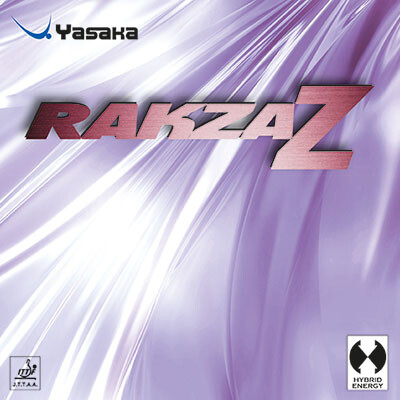
| Butterfly Glayzer | Yasaka Rakza Z | |
|---|---|---|
| Our rating | 8.2/10 | 8.6/10 |
| best_side | Forehand or Backhand (all-round offensive) | forehand |
| control | High | high |
| speed | 81 (manufacturer) | medium |
| spin | 73 (manufacturer) | extreme |
| sponge_hardness | 38 degrees (JPN) | 50 degrees (medium-hard; Extra Hard version around 57 degrees) |
| type | Inverted / High Tension (Spring Sponge X) | hybrid tacky tensor |
| weight_uncut_g | around 48g uncut | 72 |

We may earn a commission from links on this page. Learn more.
Not the same category of rubber, despite similar ratings
Butterfly Glayzer (8.2 overall) and Yasaka Rakza Z (8.6 overall) look like adjacent options on a ratings list, but the axis data says they are built for different games. The tackiness axis alone - Glayzer at 2.0, Rakza Z at 6.6, a 4.6-point delta - is the largest gap anywhere in this batch of comparisons, and it changes almost everything else about how these two rubbers behave.
Tackiness: the axis that actually decides this
A 4.6-point spread on a 0-10 tackiness scale is not a subtle stylistic difference, it is two different rubber families. Glayzer is a low-tack, spring-sponge Japanese-style rubber that generates spin through sponge rebound and topsheet grip working together, closer in feel to Dignics 05, which its own source material explicitly cites as the topsheet technology it borrows. Rakza Z is a tacky hybrid, positioned by its own pros list as a budget alternative to Dignics 09C or a boosted Hurricane 3 - rubbers that grab and hold the ball rather than springing it back. If you have played both rubber families before, this single axis predicts nearly everything else: how serves feel off the blade, how backspin balls behave on contact, how much arm effort a full loop costs.
Spin and durability: real but secondary
Spin also splits meaningfully - 8.8 for Glayzer against 9.5 for Rakza Z, a 0.7-point gap - and it is consistent with the tackiness reading: tacky topsheets tend to bite harder into the ball on brushed contact, which is exactly what Rakza Z’s own pros list claims with “exceptional, low-slip spin on loops, backspin openings and serves.” Durability also favors Rakza Z, 8.3 against 7.5, a 0.8-point edge, though neither Revspin nor RacketInsight’s coverage suggests either rubber wears out unusually fast for its price class.
Where the two are functionally tied
Throw angle is identical at 6.5 for both rubbers - a genuine zero-point delta, not a rounding artifact - so do not expect one to arc noticeably higher than the other regardless of what the tackiness difference does to your subjective feel. Speed (8.6 vs 8.7) and control (9.1 vs 9.2) both sit within 0.1 of each other, well inside noise; neither rubber is faster or more controllable than the other in any way you would notice mid-rally.
Switching from one to the other
This is one of the rare pairs in this batch where switching is a real technique decision, not a marginal upgrade. Moving from Glayzer to Rakza Z means adopting a heavier rubber - 72 grams versus roughly 48 grams uncut - that, per its own cons list, “can cause arm or wrist fatigue, especially on carbon blades,” and that goes “weak and slow at less than full power.” If your game relies on half-hearted blocks and touch shots holding up defensively, Rakza Z’s own source material is warning you away from exactly that use case.
Moving the other direction, from Rakza Z to Glayzer, trades peak forehand-loop ceiling for a rubber that, per its pros list, works for “backhand players who prefer a bouncier, linear feel” - the opposite of what Rakza Z offers, since Rakza Z’s own spec table names its best side as forehand only, versus Glayzer’s forehand-or-backhand rating.
Who each rubber actually suits
Glayzer’s own bestFor description targets intermediate offensive players, 1200-1800 USATT, wanting Butterfly quality at a manageable price, on either wing. Rakza Z’s own bestFor description is narrower and more specific: “proactive offensive players, especially forehand loopers, who want to pressure opponents with heavy spin and placement and are happy to swing fully,” plus players who like the feel of Dignics 09C or boosted Hurricane 3 but want a cheaper tacky hybrid. These are not competing descriptions of the same player - they are descriptions of two different players.
Bottom line
Do not choose between these two on rating (8.2 vs 8.6) alone - that gap is noise next to the 4.6-point tackiness chasm underneath it. Choose Glayzer if you want a springy, linear, two-wing rubber. Choose Rakza Z only if you are a committed forehand looper willing to swing fully and accept some arm fatigue in exchange for tacky-hybrid spin closer to Dignics 09C territory.
Frequently asked questions
What's the real difference between Butterfly Glayzer and Yasaka Rakza Z?
Tackiness. Glayzer scores 2.0 and Rakza Z scores 6.6 on that axis, a 4.6-point gap - the largest in this comparison. Glayzer is a springy, low-tack Japanese-style rubber; Rakza Z is a tacky hybrid closer in character to Dignics 09C or boosted Hurricane 3.
Is Yasaka Rakza Z too heavy for a two-wing rubber setup?
Its own cons list warns it can cause arm or wrist fatigue, especially on carbon blades, and its spec table lists forehand as its best side rather than forehand-or-backhand. It is built as a forehand-specific rubber, not an all-round backhand option.
Can beginners use Yasaka Rakza Z?
It is not the best starting point. Its own cons list notes it goes weak and slow at less than full power and is mediocre at flat hitting - it rewards committed, full-swing loopers rather than players still building technique.
Do Glayzer and Rakza Z differ much in throw angle?
No - both rate exactly 6.5 on the throw axis, a genuine tie. Whatever difference you feel between them will come from tackiness and weight, not arc height.