Butterfly Glayzer vs Nittaku Fastarc C-1: Which Should You Buy?
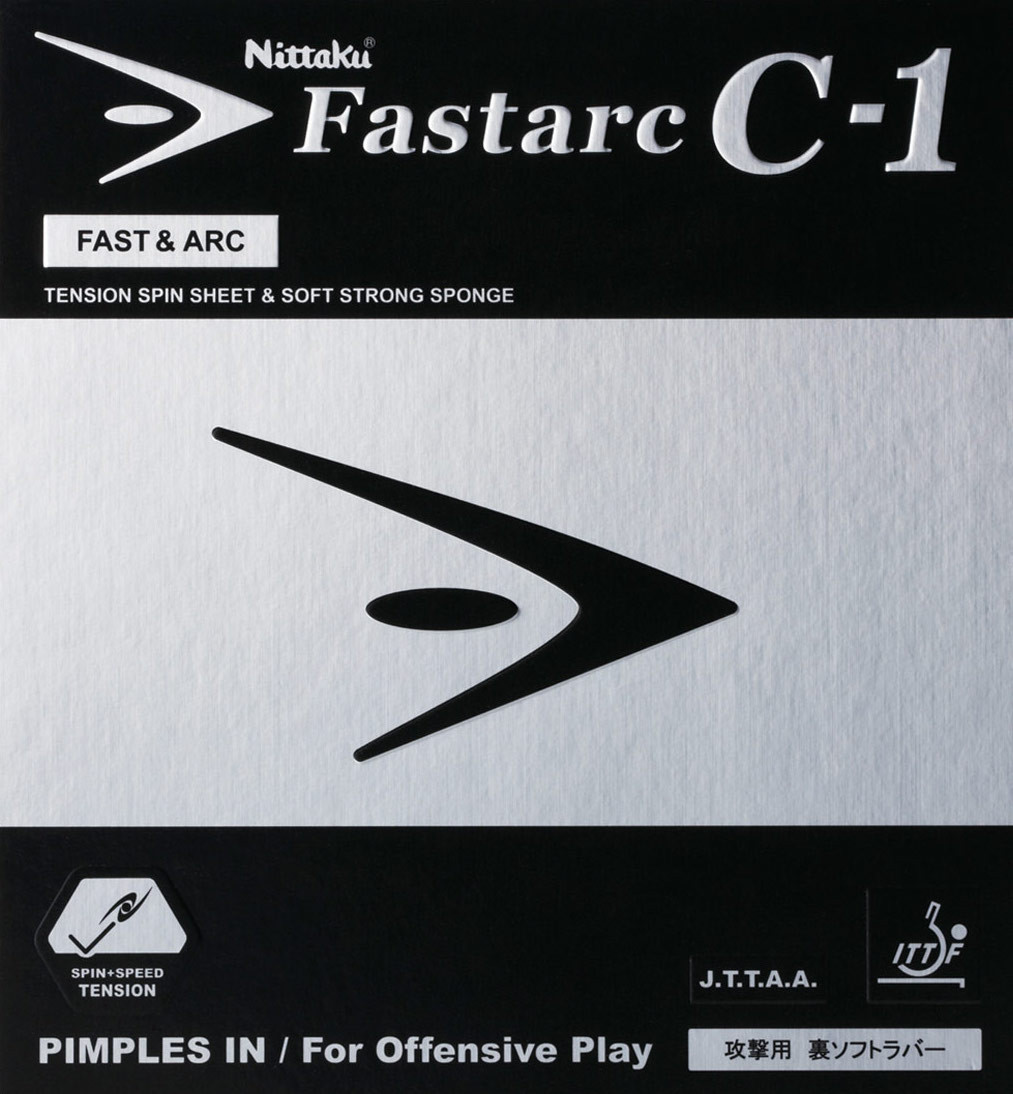
| Butterfly Glayzer | Nittaku Fastarc C-1 | |
|---|---|---|
| Our rating | 8.2/10 | 8.4/10 |
| best_side | Forehand or Backhand (all-round offensive) | backhand or allround |
| control | High | high |
| speed | 81 (manufacturer) | 15.25 (Nittaku scale) |
| spin | 73 (manufacturer) | 12.25 (Nittaku scale) |
| sponge_hardness | 38 degrees (JPN) | 45 degrees |
| type | Inverted / High Tension (Spring Sponge X) | inverted / tensor |
| weight_uncut_g | around 48g uncut | approx 47 g (157 x 150 mm sheet) |

We may earn a commission from links on this page. Learn more.
Two value-priced alternatives to flagship tensors
Both rubbers exist to undercut a more expensive flagship: Glayzer’s pros state it uses “genuine Dignics 05 topsheet technology at half the price,” while Fastarc C-1 offers “strong value versus Tenergy 64 or 80 at lower price” while sharing the G-1 topsheet lineage. Glayzer rates 8.2 overall, Fastarc C-1 rates 8.4 - a modest gap that the axis data mostly explains.
Where the real gaps are
Throw is the standout difference at 1.1 points (6.5 vs 5.4), and it runs in Glayzer’s favor - Glayzer produces a noticeably higher, more forgiving arc. Its own pros describe “high arc and medium-high throw angle for reliable net clearance,” while its cons flag the flip side: “high throw angle requires initial adjustment to prevent long balls.” Fastarc C-1’s flatter arc, per Revspin and MyTableTennis.NET reviewer commentary, suits “excellent mid-distance striking and controlled power” rather than the higher, safer looping trajectory Glayzer produces.
Durability runs the other way by nearly a full point (7.5 vs 8.4) in Fastarc C-1’s favor - its own pros claim a “durable topsheet - grip holds up well over time,” a real cost consideration if you replace rubber often, since a slower-wearing sheet stretches the interval between purchases.
Speed (8.6 vs 9.0, 0.4 points) and spin (8.8 vs 9.1, 0.3 points) both favor Fastarc C-1 by modest margins - noticeable in a side-by-side hit but not the kind of gap that should be the deciding factor on its own. Control is essentially tied (9.1 vs 9.2, 0.1 points) - do not let either rubber’s marketing suggest a meaningful control edge over the other.
Tackiness is dead even at 2 for both - both are low-tack, European-style tensor sheets, so if you are choosing based on a preference for tacky Chinese-style grip, neither of these rubbers is the answer; look elsewhere.
A word on the raw manufacturer numbers
Glayzer’s manufacturer speed rating is listed as 81 and Fastarc C-1’s as 15.25 - these are not comparable figures. Butterfly and Nittaku use entirely different internal scales for their published speed and spin numbers, so do not try to derive a ratio from them. The Revspin-aggregated axis scores above (8.6 vs 9.0) are the only numbers in this comparison that are actually on a shared scale.
Sponge hardness matters more than the axis numbers show
Glayzer runs a soft 38-degree sponge while Fastarc C-1 is noticeably firmer at 45 degrees. This difference underlies much of the throw and speed gap: a softer sponge like Glayzer’s tends to hold the ball longer and launch it on a higher arc, consistent with its throw advantage, while Fastarc C-1’s firmer sponge needs a more committed stroke to access its higher spin and speed ceiling.
Should you switch?
If you play Glayzer and find your loops sailing long, or you want a flatter, more compact trajectory for closer-to-the-table exchanges, Fastarc C-1’s lower throw and higher durability make it a reasonable move, especially given Revspin and TableTennisDaily reviewer notes about its strong mid-distance striking. If you play Fastarc C-1 and want an easier, more forgiving arc on opening loops, or you struggle with net clearance, Glayzer’s higher throw score is the relevant advantage, and Megaspin and RacketInsight reviews back its consistency and low error rate in blocking and short-game exchanges.
Neither rubber is a clear across-the-board upgrade over the other - the two real differentiators are throw, where Glayzer leads, and durability, where Fastarc C-1 leads - so pick based on which of those two traits actually matches a problem you are having with your current rubber, not based on the modest 0.2-point overall rating gap.
Who each one actually suits
Glayzer suits intermediate offensive players roughly in the 1200-1800 USATT range who want Butterfly quality and a forgiving high arc at a manageable price. Fastarc C-1 suits intermediate-to-advanced loopers who want premium tensor spin with a forgiving feel, often as a backhand rubber or an allround forehand option where arc and consistency matter more than outright top-end speed.
Frequently asked questions
Which rubber has a safer, more forgiving arc, Glayzer or Fastarc C-1?
Glayzer, by a 1.1-point margin on the throw axis (6.5 vs 5.4). Its own pros specifically cite high arc and reliable net clearance, while Fastarc C-1 favors a flatter trajectory suited to mid-distance striking.
Which rubber lasts longer before it needs replacing?
Fastarc C-1, by a 0.9-point margin on the durability axis (7.5 vs 8.4). Its own pros describe the topsheet grip holding up well over time, which matters if you replace rubber on a budget.
Can I compare Glayzer's speed rating of 81 directly to Fastarc C-1's 15.25?
No. Butterfly and Nittaku publish speed and spin numbers on entirely different internal scales, so those manufacturer figures cannot be compared directly. Use the Revspin-aggregated axis scores (8.6 vs 9.0 for speed) instead, since those sit on a shared scale.
Is either rubber tacky like Chinese rubber?
No, both score 2 out of 10 on tackiness, meaning they are low-tack European-style tensor sheets. If you specifically want a tacky feel, neither Glayzer nor Fastarc C-1 will deliver it.