Butterfly Fan Zhendong ALC vs Tibhar Stratus Power Wood: Which Should You Buy?
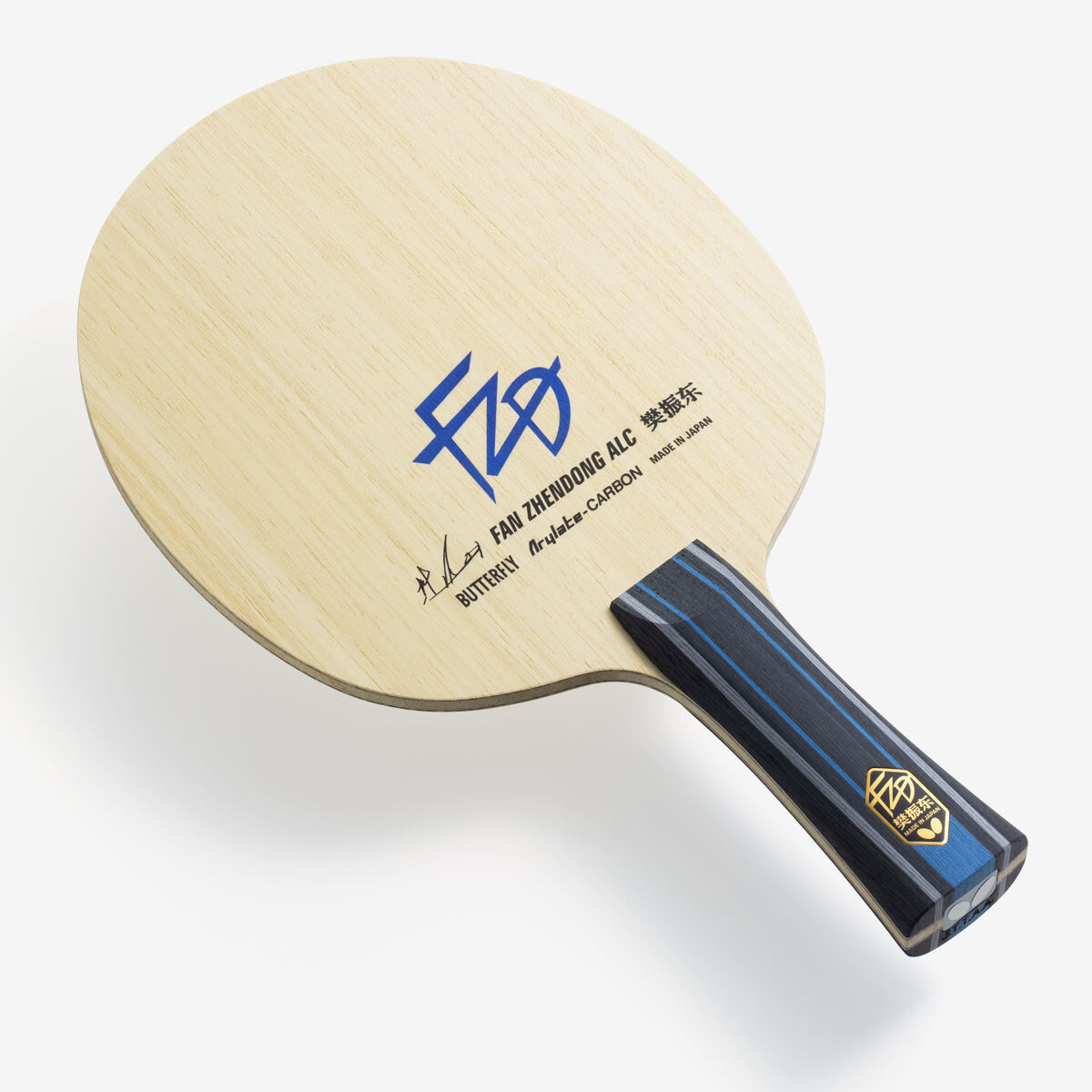
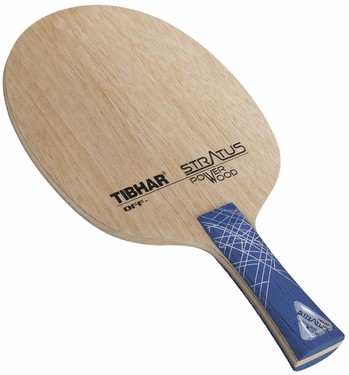
| Butterfly Fan Zhendong ALC | Tibhar Stratus Power Wood | |
|---|---|---|
| Our rating | 8.8/10 | 9.0/10 |
| feel | Crisp and direct with noticeable dwell on contact; slightly softer arc than Viscaria Super ALC | Elastic with long dwell time, lively yet controlled, larger-than-average head and big sweet spot |
| handle | Flared (FL), Straight (ST), Anatomic (AN) — notably thicker grip than Viscaria | FL / ST / AN |
| plies | 5 wood plus 2 arylate-carbon (ALC) — Koto / ALC / Limba / Kiri / Limba / ALC / Koto | 5-ply all wood (Limba-Limba-Ayous-Limba-Limba) |
| speed | OFF | OFF- |
| thickness_mm | approx 5.7mm | 6.2 |
| weight_g | 87-92g typical | 90 |
We may earn a commission from links on this page. Learn more.
The blade that beats the flagship on paper
This is the most counter-intuitive pairing in this batch: Tibhar Stratus Power Wood actually posts a higher overall rating (9.0) than Butterfly’s flagship FZD ALC (8.8), despite being a plain 5-ply all-wood blade with no carbon at all, and despite costing a fraction of the price. That alone is worth sitting with before assuming the more expensive carbon blade is automatically the better buy.
Where the axis gaps actually sit
Two of the five tracked axes are close enough to call negligible: speed (8.8 vs 8.9, a 0.1-point gap) and consistency (9.0 vs 9.1, also 0.1). Do not pay a carbon-blade premium expecting a meaningful speed or consistency advantage over Stratus Power Wood - the data does not support one existing.
Control actually favors Stratus Power Wood by 0.3 (9.0 vs 9.3), which lines up with its own pros describing “beginner-friendly control with enough speed for offense” and a “larger head and big, forgiving sweet spot.” That is a genuine, measurable advantage for an all-wood blade over a premium carbon one.
The two axes where FZD ALC pulls ahead are hardness (6.1 vs 5.4, a 0.7-point gap) and stiffness (5.2 vs 4.9, a smaller 0.3-point gap). These describe feel, not competence - FZD ALC’s carbon layup gives it a noticeably crisper, harder sensation at the point of contact, while Stratus Power Wood’s all-wood build is described by Megaspin and Tabletennis11 reviewers as “lively, elastic” with “crisp feedback and a satisfying smash sound,” a softer but still responsive character.
What the carbon actually buys you
FZD ALC’s real, stated advantage is not raw speed or control - it is behavior under maximum effort. Its pros specifically claim it stays “forgiving at 100 percent power” with the ball staying on the table under heavy topspin, and that it is compatible with “high-tension European” rubbers that a softer wood blade may not control as well. Stratus Power Wood’s own cons hint at where it runs into a ceiling: it “plays faster than its OFF- rating suggests, so not ideal for control-first defenders,” and its backhand blocks “reward precise timing” - meaning its forgiveness has limits once you are swinging at full power with a high-tension rubber setup.
Reading the reviews honestly
Reddit’s r/tabletennis threads, the Tabletennis11 blog and Megaspin reviews all converge on calling Stratus Power Wood “phenomenal price-performance” and “widely called the best value 5-ply all-wood blade” - not damning-with-faint-praise language, but a genuine endorsement relative to blades costing several times more. Meanwhile Revspin, TableTennisDaily and Megaspin’s FZD ALC reviews focus on its “world-class build quality and consistent performance,” a different kind of praise: reliability and proven pedigree rather than a raw capability advantage.
Should you switch?
If you currently play Stratus Power Wood and are wondering whether FZD ALC is worth the upgrade cost: the axis data says probably not, unless you specifically need two things Stratus Power Wood cannot give you - forgiveness at full-power topspin with a high-tension rubber setup, and a thicker handle profile suited to larger hands. If neither applies, you are not under-equipped with Stratus Power Wood; you would be paying a large premium for marginal gains on speed and consistency, and an actual step backward on the control axis.
If you currently play FZD ALC and are curious whether Stratus Power Wood could work for a lower-stakes second setup, or as a first blade for someone starting out: yes, confidently. The data shows no axis where it trails FZD ALC by a meaningful margin, and it leads on control.
Who each one actually suits
Stratus Power Wood fits beginner-to-intermediate two-winged loopers who want a forgiving, spin-friendly all-wood blade with real attacking speed at an unbeatable price. FZD ALC fits intermediate-to-advanced shakehand players with larger hands who play an aggressive, topspin-heavy loop game and specifically need carbon-level forgiveness at full power with high-tension rubber.
Frequently asked questions
Why does the cheaper all-wood blade rate higher than the carbon flagship?
Because the tracked axes do not show FZD ALC winning outright anywhere except hardness and stiffness, which describe feel rather than competence. Stratus Power Wood actually beats it on control by 0.3 points and matches it closely on speed and consistency, which is why its overall rating comes out higher.
Is Fan Zhendong ALC worth the price jump over Stratus Power Wood?
Only if you specifically need its stated advantage: staying forgiving at 100 percent power with high-tension European rubber. If you are not swinging at full effort with tensor rubber, the axis data does not show a meaningful gain over Stratus Power Wood.
Can a beginner start on Stratus Power Wood instead of a cheaper starter blade?
Its own reviews and bestFor description target beginner-to-intermediate two-winged loopers directly, with a forgiving, spin-friendly all-wood feel and real attacking speed, so it is positioned as more than a disposable first blade.
Does Stratus Power Wood have any real weaknesses next to FZD ALC?
Yes - it plays faster than its OFF- rating suggests, which is less ideal for control-first defenders, and its backhand blocks reward precise timing. It is also slightly head-heavy for some players. None of these show up as a hardness or stiffness advantage for FZD ALC on the tracked axes, though.