Butterfly Fan Zhendong ALC vs DHS Hurricane Long 5: Which Should You Buy?
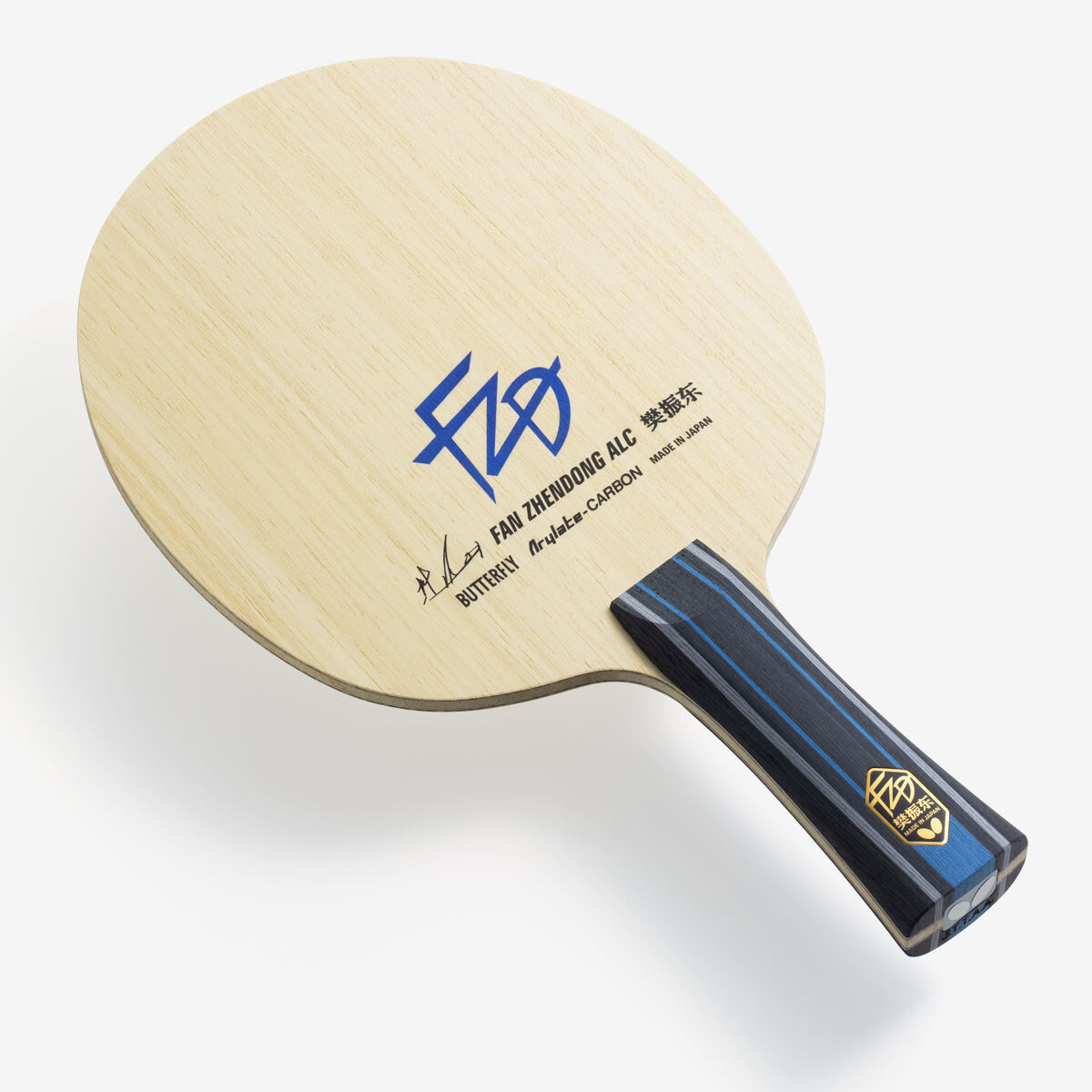
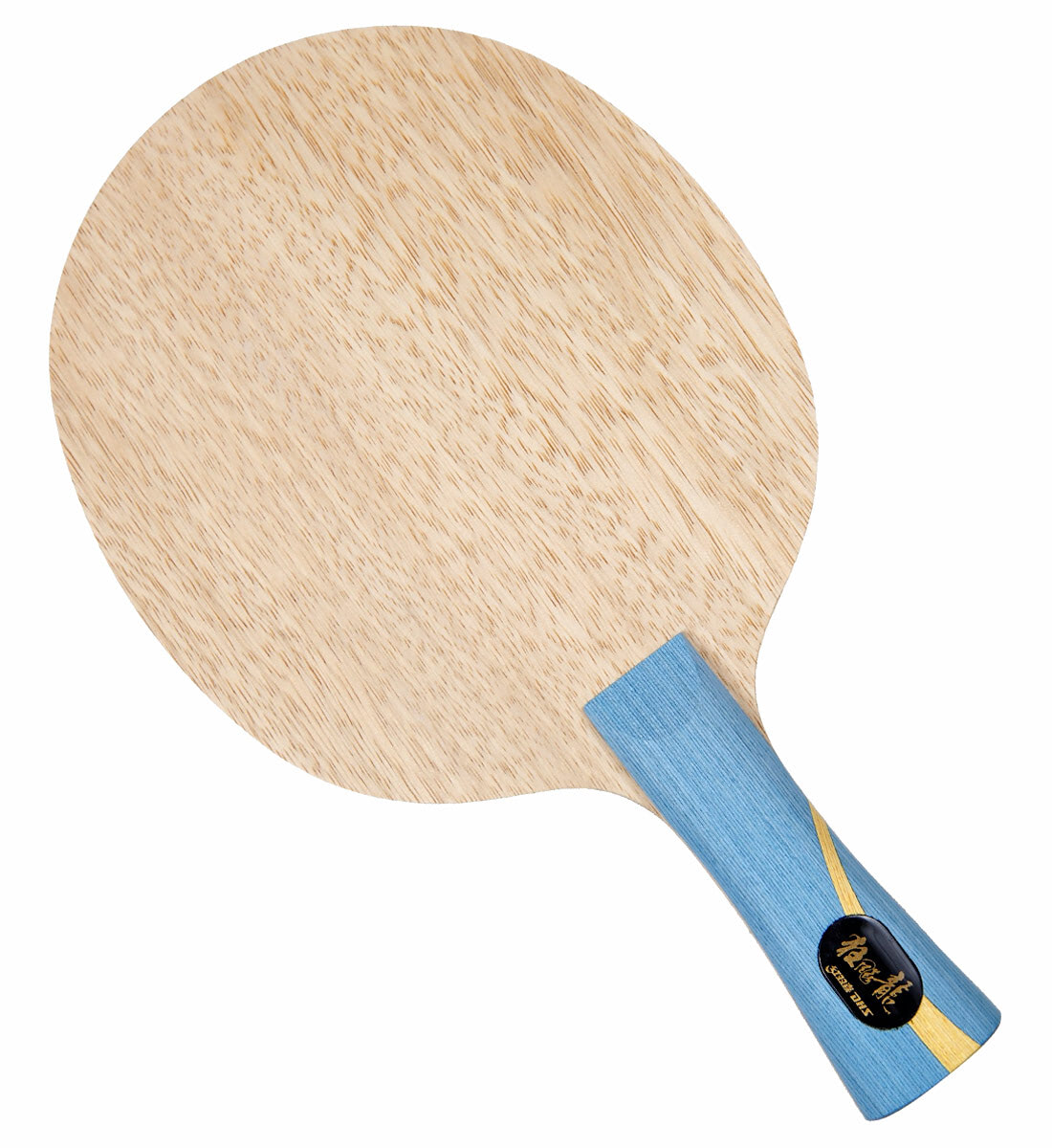
| Butterfly Fan Zhendong ALC | DHS Hurricane Long 5 | |
|---|---|---|
| Our rating | 8.8/10 | 8.6/10 |
| feel | Crisp and direct with noticeable dwell on contact; slightly softer arc than Viscaria Super ALC | hard, powerful |
| handle | Flared (FL), Straight (ST), Anatomic (AN) — notably thicker grip than Viscaria | FL/ST |
| plies | 5 wood plus 2 arylate-carbon (ALC) — Koto / ALC / Limba / Kiri / Limba / ALC / Koto | 5W+2 Arylate-Carbon |
| speed | OFF | OFF+ |
| thickness_mm | approx 5.7mm | 5.9 |
| weight_g | 87-92g typical | 89 |
We may earn a commission from links on this page. Learn more.
Two very different roads to a similar rating
FZD ALC (8.8) and DHS Hurricane Long 5 (8.6) sit close on overall score, but they get there through completely different blade technology, and the axis data explains why players tend to have a strong preference for one over the other rather than treating them as interchangeable.
The speed gap that isn’t what it looks like
The biggest axis delta here is speed: 8.8 for FZD ALC versus 9.5 for Hurricane Long 5, a 0.7-point gap in the DHS blade’s favor. Taken alone, that reads as Long 5 hitting harder. But Long 5’s own listed con directly complicates that number: reviewers state it is “not actually faster than outer-carbon blades, and feels slow if your looping technique isn’t developed.” That is because Long 5 is an inner-carbon construction - the carbon layer sits beneath wood plies rather than on the surface like FZD ALC’s outer-ALC layup - so its speed depends on a deep, developed loop stroke to unlock, rather than being available on contact the way an outer-carbon blade’s speed is. In practice, the 0.7-point speed edge is conditional: it belongs to players with strong technique, not to anyone who picks the blade up.
Control is a smaller gap (9.0 vs 9.3, 0.3 points) favoring Long 5, consistent with Reddit and Revspin reviewer language calling Long 5’s control “outstanding for an OFF+ blade” thanks to its inner carbon keeping soft touches, blocks and pushes predictable.
Three axes are close enough to ignore as decision factors: stiffness (5.2 vs 5.1, 0.1 points), hardness (6.1 vs 6.1, dead even), and consistency (9.0 vs 9.1, 0.1 points). None of these should sway a purchase - any perceived difference in feel here is more likely coming from rubber choice than from the blade itself.
The real differentiator: rubber compatibility
This is where the two blades actually part ways, and it is not fully captured by the axis numbers. FZD ALC is explicitly built to work with “a wide range of rubbers, from tacky Chinese to high-tension European” per its pros. Hurricane Long 5’s own pros and cons are blunt about the opposite: it “comes alive with tacky Chinese rubber” but “strongly favors Chinese rubber on the forehand - players who dislike tacky rubber may not get along with it.” TableTennisDaily and Revspin reviews echo this: the blade’s elite looping and serve-and-receive game is specifically tied to a tacky Chinese forehand rubber, not a general-purpose trait.
That single fact should decide most purchases. If your rubber setup is European or Japanese tensor across the board, Long 5’s headline strengths - the deep catapult, the elite spin game - are largely wasted, and FZD ALC’s broader compatibility makes it the safer choice. If you already play or want to commit to tacky Chinese rubber on your forehand, Long 5’s inner-carbon control profile is a legitimate reason to pick it over FZD ALC.
Weight and finish are worth a second look
Long 5 runs heavier (89-93g typical versus FZD ALC’s 87-92g), and its own cons flag that the retail “commercial Long 5” has a known “hollow” feel compared with the premium W968 version of the same blade family. That is a real caveat worth knowing before buying - you are not necessarily getting the exact build reviewers are describing when they praise the deepest catapult and control.
Should you switch?
If you currently play FZD ALC with European tensor rubber and are happy with it, switching to Long 5 is unlikely to net a real gain - you would be giving up broad rubber compatibility for a control profile that depends on a pairing you are not using. If you currently play Long 5 with tacky Chinese rubber and are getting the elite looping game reviewers describe, there is no reason to move to FZD ALC; you would be trading a purpose-built spin setup for a more generalist blade. The switch only makes sense if your rubber preferences are also changing - moving toward tacky Chinese suggests Long 5, moving toward tensor variety suggests FZD ALC.
Who each one actually suits
FZD ALC fits aggressive shakehand loopers with larger hands who want proven, forgiving power across a wide range of rubber setups. Long 5 fits intermediate-to-advanced attackers who specifically loop with tacky Chinese rubber on the forehand and want a controllable, high-arc, close-to-mid-table topspin game - and who are prepared for a blade that rewards developed technique rather than giving speed away for free.
Frequently asked questions
Is DHS Hurricane Long 5 really faster than Fan Zhendong ALC?
On the aggregated axis score, yes, by 0.7 points. But Long 5's own reviewers note it is not actually faster than outer-carbon blades like FZD ALC and can feel slow until your looping technique is developed, because it is an inner-carbon design that needs a committed stroke to unlock its speed.
Do I need tacky Chinese rubber to get the most out of Hurricane Long 5?
Essentially yes. Its own pros and cons state it comes alive with tacky Chinese rubber and strongly favors Chinese rubber on the forehand, while players who dislike tacky rubber may not get along with it. If your rubber setup is European or Japanese tensor, FZD ALC's wider compatibility is the safer pick.
Is the commercial Hurricane Long 5 the same as the reviews describe?
Mostly, but with one caveat worth knowing: the commercial Long 5 is reported to have a known hollow feel compared with the premium W968 version of the same blade family, so some of the deepest-catapult praise may reflect the premium build rather than the retail one.
Which blade is more forgiving for a wider range of rubbers?
FZD ALC, clearly. Its pros specifically call out compatibility from tacky Chinese to high-tension European rubber, while Long 5's strengths are concentrated around tacky Chinese rubber on the forehand specifically.