Singapore Smash: How to Use These Forehand Non-Tacky Rubbers
Nowadays tacky rubbers — high-tacky or semi-tacky — dominate the forehand. The more I watch, the more I see that in large halls, when players are pushed back, the arc stability and spin of tacky rubbers are simply superior. Non-tacky rubbers rely primarily on penetrating power to score; once you are in the mid-to-back court, both consistency and threat are usually lower.
Still, a handful of players remain committed to non-tacky on the forehand. Presumably, for them, forehand speed and penetration remain the decisive factor.
ZYRE-03
Users: Lin Yun-Ju, Harimoto Tomokazu, Hoshimoto Shunsuké, Jha
Despite being non-tacky, ZYRE-03 is widely considered easy to dwell and reliably stable for lifting backspin. That said, easy to dwell and stable on backspin does not automatically mean it generates heavy spin.
Z03 can be fast and it can arc long. “Long arc” means it produces extended topspin trajectories, especially during top-spin rallies. Some players who first try it feel that after driving, the ball bounces too far and arcs too long, leading to errors.
For Harimoto, Hoshimoto, and Jha, you rarely hear people describe their balls as “heavy.” That is because they rely primarily on speed. The ball is fast enough and aggressive enough — that is what Z03 excels at. Its absolute spin on lifted backspin is not strong, but it gets the ball up, lets you enter the rally, and then you play speed.
Remember that the racket is a complete system. We are discussing just the rubber here; pairing with different blades will change the outcome.
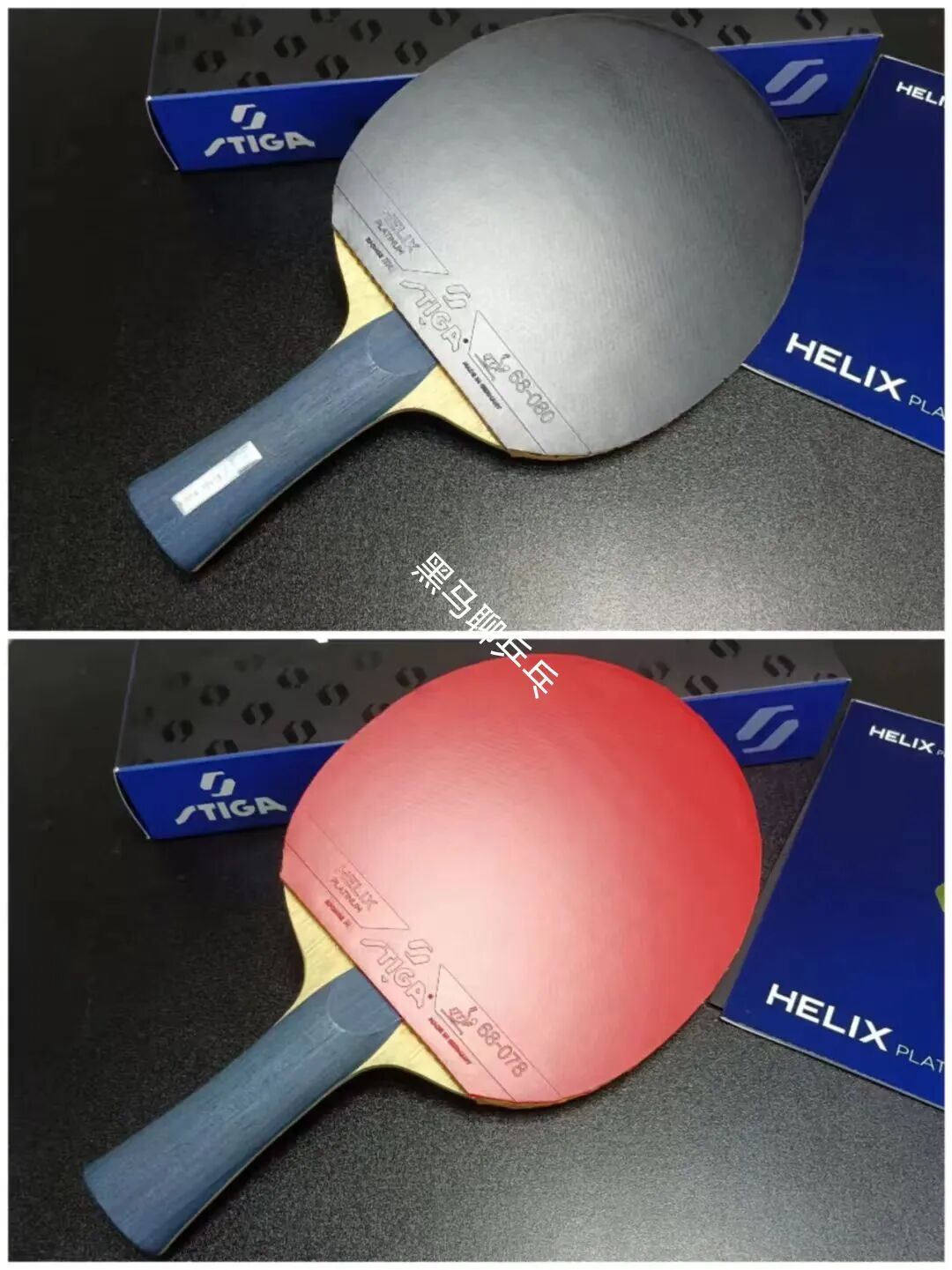
Stiga Helix Platinum
User: Moregard
I have tested the M and XH hardness versions. The M hardness is already more than adequate for most recreational backhand use. Slightly harder than the same-grade DNA Platinum, and when you drive through it, it still feels solid. Its spin quality is impressive — among German non-tacky rubbers, it is at the top for spin. This is where it outperforms the DNA Platinum series. Particularly on lifting a half-out-of-reach backspin ball.
Stiga DNA Platinum
User: Hannah Gouda
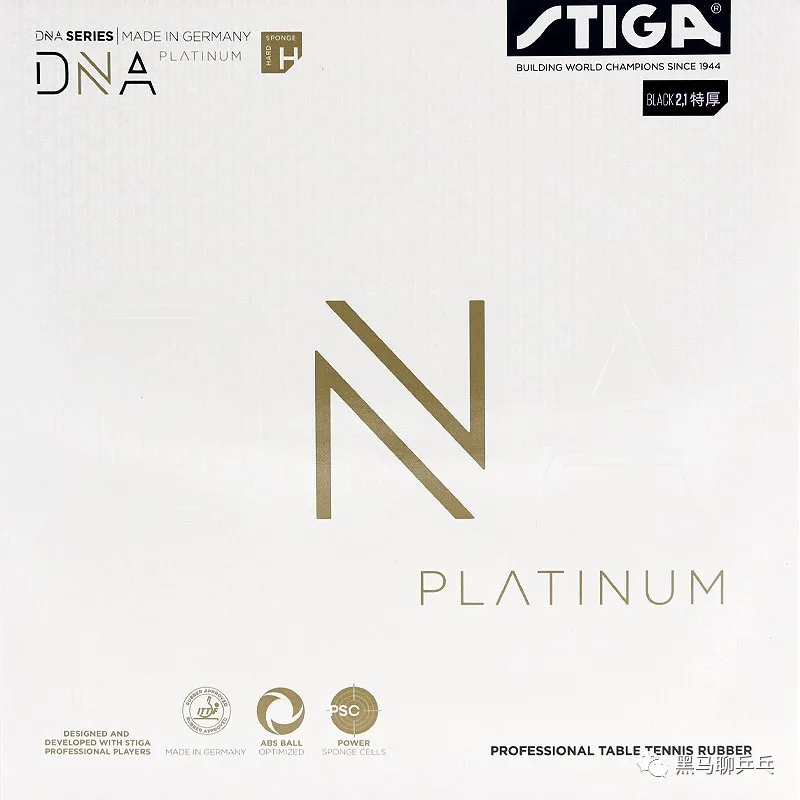
For recreational backhand use, M or H hardness works. I find that H hardness gives something of a Tenergy 80 character. On the forehand, XH is an option. Although it is technically non-tacky, the friction is completely sufficient. Compared to the Helix, DNA Platinum feels easier to drive through. What does that mean in practice?
For recreational forehand play, it lowers the barrier to generating speed and penetration. If you are looking for a more affordable alternative to Tenergy, DNA Platinum is worth considering.
Nittaku Fastarc G-1
User: Ito Mima
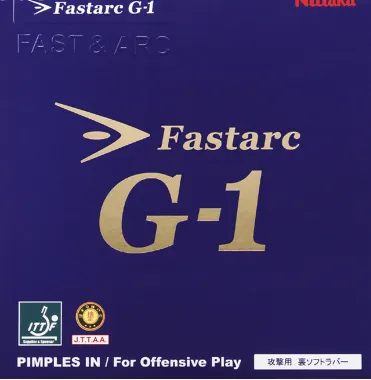
G-1 handles today’s plastic ball well on both forehand and backhand. For backhand, Super Thick (2.0 mm) is the usual choice; for forehand, 2.0 or Max. The Max thickness generates more power than the typical German non-tacky Max and is actually well-suited for the forehand of recreational players in China. The sponge has a good ball-wrapping feel, which is why it was considered a budget alternative to T05 early on. Controllability is also more forgiving than T05 — less bouncy off the blade.
Butterfly Tenergy 05 Hard
User: Zhu Yuling
Powerful and precise in grip — this feels like a non-tacky rubber that shares DNA with a tacky rubber. Spin and power reserve are not sacrificed. Zhang Jike once used it on his forehand (at a Swedish Open in the year before his retirement); Zhu Yuling has used it long-term. It is heavy and hard, but once you adapt, it is excellent on the forehand. It demands that you actively generate force, so the entry barrier is slightly higher.
But in a traditional sense it fits very naturally with how forehand play is typically practiced in China — whether looping a half-out-of-reach backspin ball with heavy spin, or powering through with a topspin drive. If I were a few years younger and didn’t need to stay up late working every night, this would be my top choice.