Atypical Inner Carbon Blades: When the Core Changes Everything
After the piece on classic inner and classic outer blades ran a couple of days ago, readers asked me to cover atypical outer and atypical inner blades. Today let’s sort through the atypical inner-fiber blades first.
To recap: the typical inner-fiber blades I’ll highlight are three: W968, Yalyard Max ZFC, and Hugo ARY-C.
All three are clearly built around spin and power. At moderate force levels they’re stable and controllable, not especially fast. They rely on spin to maneuver, but give back a lot when you give a lot — after a full swing, the ball quality explodes and amplifies, and the deep power creates a sense of physical domination.
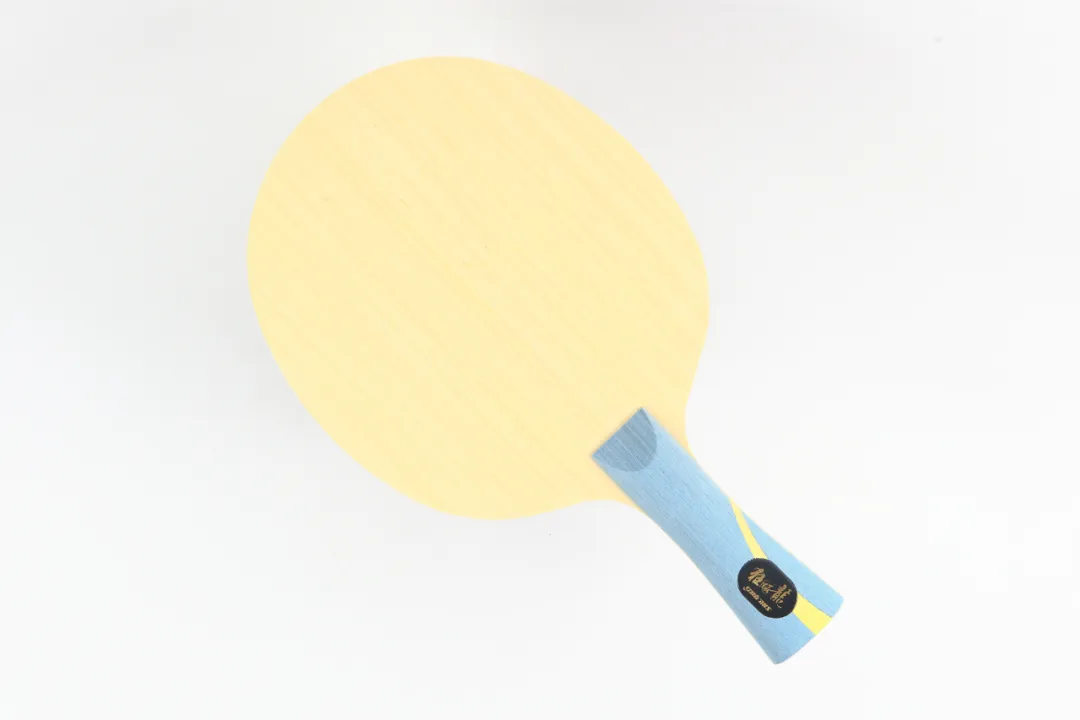
W968 Official Digital Edition. Very typical. After a full swing, it springs dramatically — a turbocharged looping arc, genuinely high-octane. But among these three, it also demands the most power and offers the least ball-borrowing. Several contributing factors: the thin handle, the large blade head, and the balance point sitting further toward the head. Without a full swing, it just doesn’t go. The backhand especially. The old 968 was already sluggish on the backhand; the smaller head helps a bit, but not dramatically.
The emphasis on active power generation, especially from the backhand for amateurs, is still a high bar.
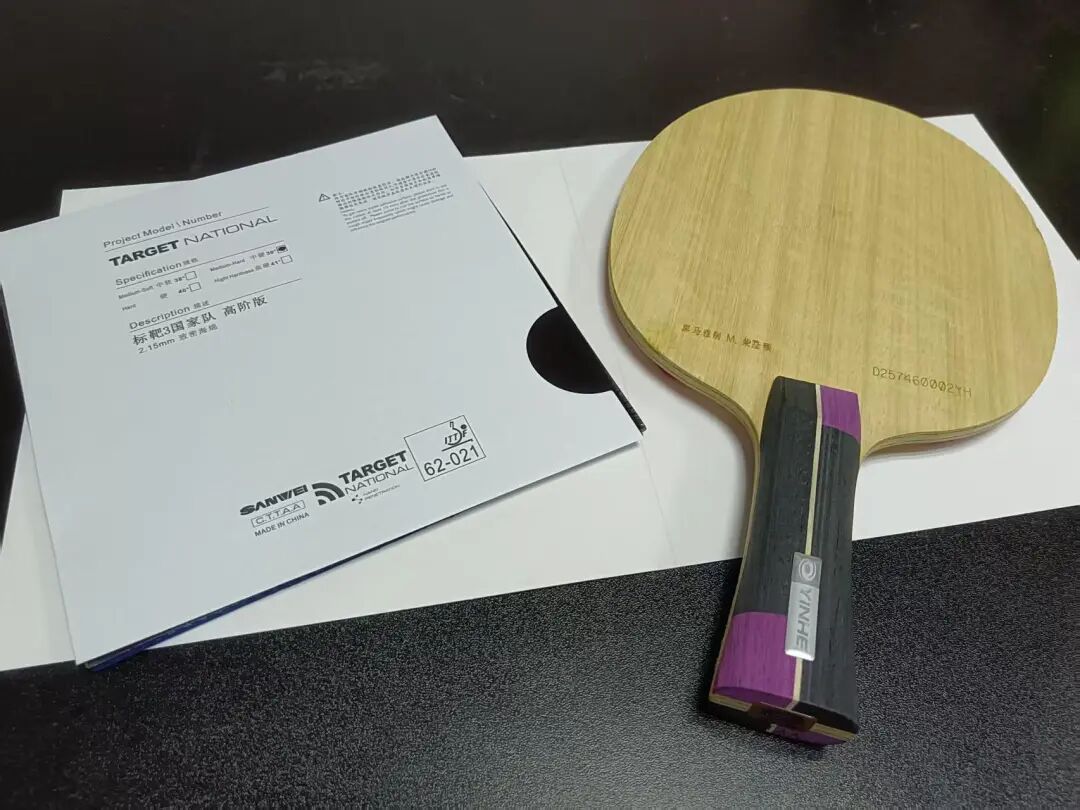
Yalyard Max ZFC. Many readers have tested this one. Also built for stable, heavy spin, with a spring-board feel at full power. The fiber gives it good support and snap speed. Still firmly a typical inner blade — around 5.8mm, a thin blade — with the same profile: at low-to-mid power, spin is the primary weapon (though faster than many inner blades), and above moderate force, it wins through raw power.
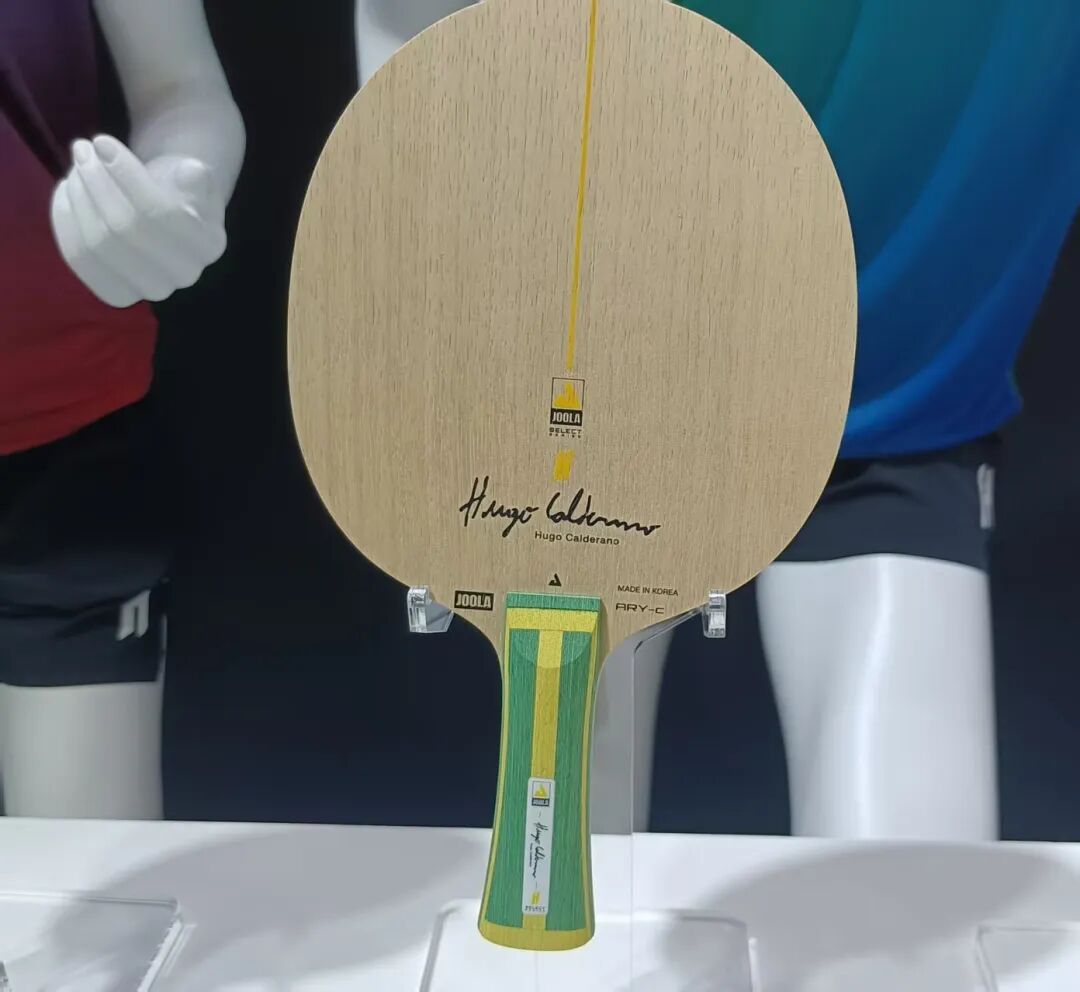
Hugo ARY-C. Honestly I only tested the ARY-C briefly at the sporting goods expo — but the forehand feel was quite clear even in a few minutes. Also inner green aramid carbon. The grip feels fuller. The deep power seems stronger than the Andro Cornilleau mixed carbon with the same inner green aramid fiber, and not weaker than the Golden Hinoki. Whether it’s the thicker body or some other factor, I didn’t observe closely at the time. Still categorizing it as typical inner for now. I’ll revisit after more testing.
So what makes a blade “atypical inner”? The key enabling element: using a paulownia core.
Harimoto Tomokazu SALC. Very clear example. Especially when paired with a transparent rubber — once you can play through the rubber — you’ll notice: this blade leans toward transparency and through-power. Despite inner Super ALC, it doesn’t feel stiff or harsh. On the contrary, it’s very easy to play through, smooth feel, high margin for error.
Obviously, if you swap the paulownia core for ayous, the result changes completely. Last year I had a factory build two blades matching the Harimoto SA inner structure: one with paulownia (which became the “Meow”), one with ayous — more bottom-end power, but a more noticeable gap between low-force and high-force feel, better power delivery but harder to control, lower consistency.
In other words, a blade like the Harimoto SALC or “Meow,” with paulownia core, transmits well after a full swing rather than building up explosive power. That makes it an atypical inner blade.
The Donic Lindea is essentially the same story — the feedback from players confirms it. Rock-solid stability, but middle-of-the-road deep power. This is the standard profile for an atypical inner blade with paulownia core.
Can you strengthen the power feel? Yes — two approaches, illustrated by two blades: Harimoto Tomokazu SZLC (thicker body) and Cyber 6 (modified face area).
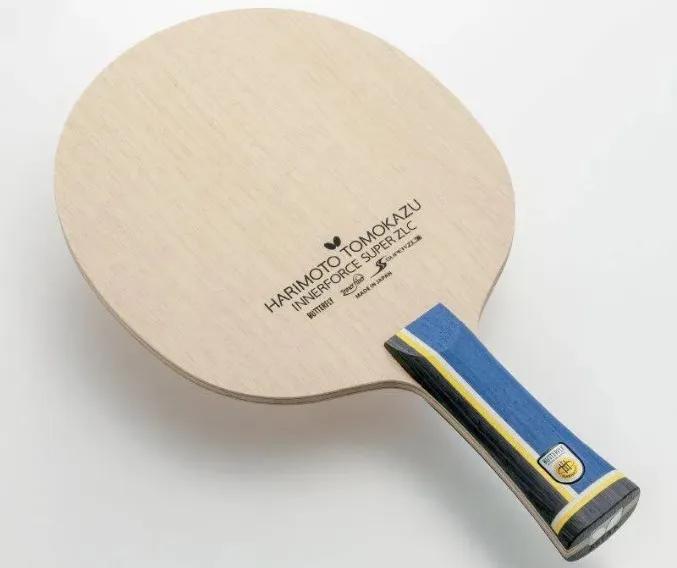
Harimoto Tomokazu SZLC. Total thickness around 6.2mm. Thicker blades have better stiffness — Ovtcharov ALC is stiffer than Innerforce ALC because it’s thicker, though it retains the ayous core and the traditional approach. Still, increased stiffness does improve ball-borrowing speed somewhat.
The Harimoto SZLC uses a paulownia core. The result shifts toward “striking” rather than “looping.” You can still loop hard, but it’s not the classic typical-inner approach: spin-dominant at low-to-moderate force, explosive deep power at full force. Less spin capability, but far more speed, and more impact feel on drives.
Cyber 6. Also uses a paulownia core. I’ve been pondering lately whether a paulownia-core inner blade is a real trend, and how far it can go. But whatever the answer, many questions can have multiple valid answers.
At minimum, paulownia-core inner is “one of” the current trends. This type emphasizes controllability and, within inner-blade territory, emphasizes speed and change-of-direction capability more. The Cyber 6 further enhances power feel through changes to the blade face and sweet spot. This isn’t paulownia’s strength by nature — that’s what ayous cores are for.
The Cyber 6 still isn’t a typical inner blade. At low-to-moderate force, it still doesn’t rely on spin to restrain opponents…